
Embedded antennas in electronic products are an indispensable core component of modern wireless devices. They are cleverly designed inside the devices without being exposed, achieving a compact and aesthetically pleasing product form while ensuring stable and efficient wireless internet and communication experiences. They are widely used in various internet terminals such as consumer electronics, the Internet of Things, in-vehicle devices, and smart homes. The following will provide a detailed breakdown of the main types, technical parameters, practical application cases, and scenario extensions of embedded antennas, while also analyzing their design challenges and development trends, presenting the core value of embedded antennas in a comprehensive manner.
Main types and core technologies of embedded antennas
Embedded antennas are primarily categorized into two types based on their manufacturing processes, forms, and application scenarios: chip antennas and custom-molded antennas. These two types of antennas differ in their specifications and performance, catering to the design requirements of various devices. The following provides a detailed explanation with specific parameters and practical application cases.

Chip antenna
Chip antennas are tiny, standardized surface-mount devices (SMD) that can be directly soldered onto printed circuit boards (PCB). Their core advantages lie in their compact size and controllable cost, making them ideal for small devices with extremely limited space. They come in common standardized specifications, facilitating large-scale automated production. They are mainly divided into two categories: multilayer ceramic antennas and PCB antennas.
1.Multilayer ceramic antenna
- Key specifications: The standard dimensions are 1.2mm×2.0mm×0.5mm and 2.0mm×3.2mm×0.8mm (smaller sizes can be customized); dielectric constant εr=10-20 (high dielectric constant enables size reduction); operating frequency range covers 2.4GHz, 5GHz, 13.56MHz, 1.5GHz (compatible with Wi-Fi, Bluetooth, GPS, etc.); gain range 0.5-2dBi; bandwidth 20-50MHz (relatively narrow); operating temperature -40℃~85℃, meeting consumer electronics industry standards.
- Structure: It is formed by alternately stacking multiple layers of ceramic dielectric sheets and metal conductors (copper foil) and sintering them at high temperatures. The metal conductors form radiating elements and feed structures. Leveraging the high dielectric constant characteristic of ceramics, wireless signal transmission and reception are achieved within an extremely small volume.
- Features: With an extremely compact design, it is currently the preferred antenna type for small devices. It is low-cost, with a unit price as low as 0.5-2 yuan for bulk purchases. It is compatible with automated SMT soldering, ensuring high production efficiency. However, its bandwidth is relatively narrow, and its signal transmission efficiency (typically 30%-60%) is lower than that of custom-molded antennas. It has stringent requirements for PCB layout, with no batteries or metal components within a 5mm radius, as these can seriously affect signal performance.
- Application Scenarios and Cases: Primarily used in microelectronic products with extremely limited space. Core cases include: Huawei FreeBuds Pro 3 Bluetooth earbuds (with a built-in 2.4GHz multi-layer ceramic antenna, measuring 1.2mm×2.0mm, supporting Bluetooth 5.3 connectivity), Xiaomi Mi Band 8 (with a built-in 1.5GHz ceramic GPS antenna for positioning), Alibaba Cloud Link WSN IoT sensors (using a 2.4GHz ceramic antenna, measuring 2.0mm×3.2mm, for wireless transmission of environmental data), and TP-LINK USB wireless network cards (with a built-in compact ceramic antenna, suitable for laptop Wi-Fi expansion).
2.PCB antenna
- Key specifications: Dimensions are customized according to the frequency band. For the 2.4GHz band, the conventional length is approximately 31mm (the snake-like layout can be compressed to less than 15mm). The operating frequency band covers 2.4GHz, 5GHz, and 700MHz, allowing flexible design to accommodate multiple frequency bands. The gain range is 1-4dBi; bandwidth is 50-100MHz; signal efficiency is 60%-80%. There is no additional material cost, only PCB area is required (conventionally occupying 10mm×30mm space). The operating temperature range is -40℃~125℃, suitable for multiple scenarios in industrial and consumer electronics.
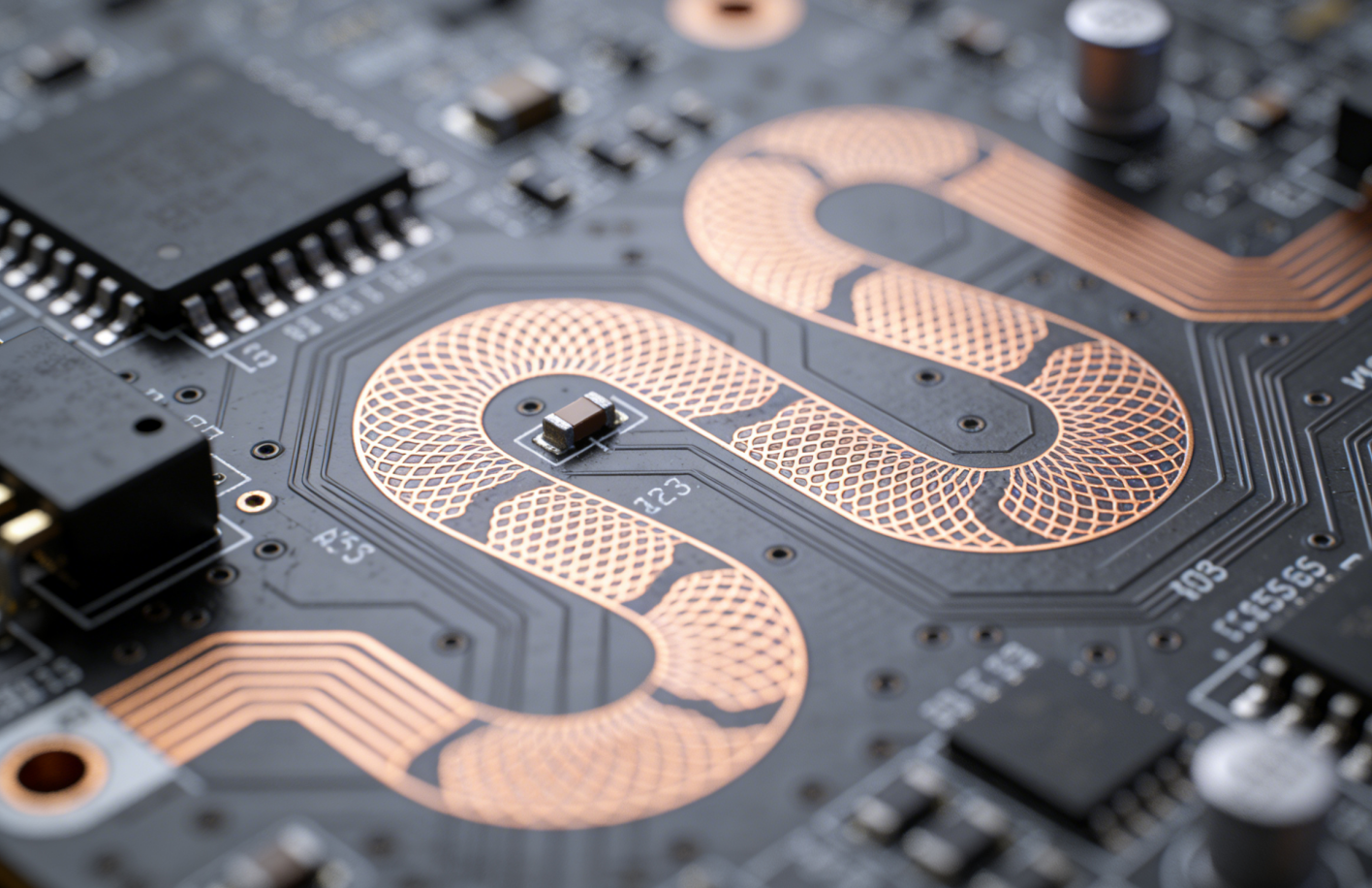
- Structure: Without requiring additional components, copper foil is directly etched onto the device's mainboard or a separate PCB daughter board. Essentially, it is a copper wire "drawn" onto the circuit board. Common shapes include serpentine, F-shaped, inverted F-shaped, and monopole. By adjusting the length, width, and spacing of the copper wire, signal transmission and reception in different frequency bands can be achieved.
- Features: Lowest cost, almost no additional material cost, only adding PCB etching process; flexible design, can adjust shape and size according to the PCB layout of the device, adapting to different devices; stable signal performance, relatively less interference from the surrounding environment; disadvantages include requiring a large PCB area, high professional ability requirements for designers, and the need to optimize the layout through electromagnetic simulation (such as HFSS software) to avoid signal attenuation.
- Application Scenarios and Cases: Compatible with almost all types of electronic products, it is the most widely used chip antenna type. Core cases include: Xiaomi Router 4A (with four serpentine PCB antennas etched on the motherboard, operating in the 2.4GHz band, with a gain of 3dBi, and supporting Wi-Fi 5 connectivity), Xiaoai Pro Smart Speaker (with a built-in inverted F-shaped PCB antenna, operating in the 2.4GHz band, enabling dual-mode connectivity for Wi-Fi and Bluetooth), Deschmann Q50M Smart Lock (with a built-in small PCB antenna, supporting Wi-Fi remote control and Bluetooth unlocking), and Industrial IoT Gateway (with a built-in multi-band PCB antenna covering both 2.4GHz and 5GHz, used for device data aggregation and transmission).
Custom-made molded antenna
Custom molded antennas are independently manufactured and individually packaged, and then installed on device housings or dedicated brackets through connectors, spring clips, or other methods. Their core advantages lie in flexible design and excellent signal performance, which can adapt to irregular structures and high-performance requirements of devices. However, their cost is higher than chip antennas, requiring separate mold opening or custom processes. They are mainly divided into three categories: FPC antennas, LDS antennas, and metal sheet antennas.
1.FPC antenna
- Key specifications: Thickness 0.1-0.2mm, minimum bendable radius 0.5mm (adaptable to irregular surfaces); operating frequency range covering 2.4GHz, 5GHz, 700MHz-3.5GHz (4G/5G), 13.56MHz; gain range 2-5dBi; bandwidth 80-150MHz; signal efficiency 70%-85%; material composed of polyimide (PI) film and copper foil, lightweight (single piece 0.1-0.3g); unit price for bulk purchase 2-5 yuan, with a higher cost compared to PCB antennas.
- Structure: The metal radiating layer (copper foil) is etched onto a flexible polyimide (PI) film, with a 3M adhesive applied on the back side. It can be directly attached to the inner wall, shell, or battery surface of the device. It is electrically connected to the motherboard through an FPC connector and can be designed into any shape to accommodate the irregular structure of the device.
- Features: Lightweight and flexible, it can closely fit the inner walls of devices and curved surfaces, significantly saving PCB space; its signal performance surpasses chip antennas, offering wider bandwidth and higher efficiency; it boasts extreme design flexibility, allowing for customization of shape and size according to the device structure; however, its cost is higher than PCB antennas, requiring a separate FPC connector to connect to the motherboard, and long-term bending may lead to metal layer fracture, affecting its service life.
- Application Scenarios and Cases: It is the most mainstream embedded antenna form in current consumer electronic devices. Core cases include: Apple iPhone 15 (with four built-in FPC antennas supporting 5G, Wi-Fi 6E, Bluetooth, and GPS functions, pasted on the inner wall of the body), iPad Pro 2024 (with built-in FPC Wi-Fi antenna and cellular antenna, pasted on the inside of the screen frame), DJI Mini 4 Pro drone (with built-in FPC GPS antenna and image transmission antenna, pasted on the body shell, adapting to the compact structure of the drone), TCL 75-inch smart TV (with built-in FPC Wi-Fi 6 antenna, pasted on the TV backplane to achieve stable networking), and Lenovo Xiaoxin Pro14 laptop (with built-in FPC Bluetooth antenna, pasted on the inside of the palm rest, saving space on the motherboard).
2.LDS antenna
- Key specifications: laser engraving accuracy ±0.01mm, metal layer thickness 1-3μm (copper or nickel gold); operating frequency range covering 700MHz-3.5GHz (4G/5G), 2.4GHz, 5GHz, 1.5GHz; gain range 3-6dBi; bandwidth 100-200MHz; signal efficiency 80%-90%; compatible with three-dimensional surfaces, with a minimum bending radius of 0.3mm; mold + process cost is high, with a single mold cost of 50,000-100,000 yuan and a single antenna production cost of 5-10 yuan, making it the most expensive type of embedded antenna.
- Structure: Manufactured using the advanced Laser Direct Structuring (LDS) process. The first step involves injection molding of the equipment bracket or housing using laser-activatable plastic (such as PC/ABS composite materials). The second step involves precise laser engraving of the antenna pattern on the surface of the bracket/housing, activating the metal particles on the plastic surface. The third step involves metallizing the engraved part through electroless plating (copper deposition, nickel-gold deposition), forming a complete antenna radiating element and feed structure, which can be directly integrated onto the equipment housing.
- Features: Extremely high precision, with antenna pattern errors controllable within 0.01mm; can be directly integrated onto the three-dimensional surface of the device casing, achieving "case-antenna integration" and greatly saving internal space within the device; excellent signal performance and consistency, with minimal interference from surrounding components; the disadvantage is that the mold and process costs are extremely high, only suitable for high-end devices, and the production cycle is long (requiring multiple processes such as mold making, laser engraving, and electroless plating).
- Application Scenarios and Cases: Primarily used in high-end electronic products that demand extreme space utilization and signal performance. Core cases include: Samsung S24 Ultra (the mid-frame of the body adopts LDS technology to engrave 5G antennas and Wi-Fi antennas, achieving multi-band coverage and fitting the slim and lightweight design of the body), Apple Watch Ultra 2 (the dial housing incorporates an LDS GPS antenna and Bluetooth antenna, featuring a compact size, supporting precise positioning and wireless charging), Huawei Mate 60 Pro (the rear camera module bracket integrates an LDS antenna, saving space on the motherboard and enhancing 5G signal strength), and Sony WF-1000XM5 Bluetooth Earbuds (the charging case incorporates an LDS antenna, enabling quick Bluetooth pairing and firmware upgrades).
3.Metal patch antenna
- Key specifications: Made of stainless steel, beryllium copper, or phosphor bronze, with a thickness ranging from 0.1 to 0.3mm; dimensions customized according to applications, with a conventional size of 20mm×5mm×0.2mm; operating frequency range covering 700MHz-2.4GHz; gain range of 2-4dBi; signal efficiency of 70%-80%; high mechanical strength, capable of withstanding more than 1000 insertion and extraction cycles or bending; operating temperature range of -40℃~150℃, suitable for harsh environments such as industrial and vehicular settings; single unit cost ranging from 3 to 8 yuan, higher than PCB and ceramic antennas.
- Structure: It is made of independent metal sheets through stamping and laser cutting processes, and designed into specific shapes (such as strip and arc shapes) according to the antenna frequency band. The bottom is equipped with spring tabs or soldering pins, which are connected to the mainboard through spring tab contact or soldering. It can be installed on equipment brackets or housings without the need for pasting.
- Features: Stable signal performance, high mechanical strength, capable of withstanding significant mechanical stress, high and low temperatures, and humid environments, with strong reliability; disadvantages include high cost, difficulty in forming complex three-dimensional shapes, slightly larger space occupation compared to FPC and LDS antennas, and insufficient design flexibility.
- Application scenarios and cases: Primarily used in devices with high requirements for reliability and mechanical strength. Core cases include: early Lenovo ThinkPad laptops (with built-in strip-shaped metal Wi-Fi antennas installed on the screen frame, providing strong mechanical stability), Bosch in-vehicle communication modules (with built-in metal 4G antennas, adapting to high and low temperatures and vibration environments in vehicles, supporting remote networking), industrial control equipment (with built-in metal Bluetooth antennas for remote debugging of equipment, adapting to harsh industrial environments), and old-fashioned tablet computers (with built-in metal GPS antennas installed on the top of the body, achieving stable positioning).
Embedded antennas divided by function and frequency band
Modern electronic products often need to support multiple wireless frequency bands and communication protocols simultaneously, so a single device typically integrates embedded antennas with multiple functions. The following classification by function and frequency band details the specifications, performance characteristics, application devices, and scenario extensions of various types of antennas, clarifying the core adaptation requirements for antennas of different frequency bands.
1.Wi-Fi/Bluetooth antenna
- Key specifications: Operating frequency range covers 2.4GHz (2400-2483.5MHz) and 5GHz (5150-5850MHz), with the addition of the 6GHz (5925-7125MHz) band for Wi-Fi 6E/7; gain range of 2-5dBi; bandwidth of 200-500MHz (with a wider bandwidth for the 6GHz band); compatible protocols include Wi-Fi 4/5/6/6E/7, Bluetooth 4.2/5.0/5.3/5.4; MIMO specifications support 2×2, 4×4, 8×8 (for high-end routers), enhancing data transmission speed and signal stability; common types include FPC antennas, LDS antennas, and some small devices adopt multi-layer ceramic antennas.
- Features: Wide frequency coverage, suitable for short-range high-speed data transmission; to support MIMO technology (Multiple Input Multiple Output), high-end devices usually have 2, 4, or even 8 built-in antennas to achieve signal diversity reception, enhance transmission rate (Wi-Fi 7 peak rate can reach 30Gbps) and anti-interference capability; compact size, flexible adaptation to different device forms; Bluetooth and Wi-Fi can share antennas (dual-mode antennas), saving device space.
- Application Devices and Scenario Extensions: Covering almost all electronic products, the core scenarios include: home scenarios (routers, smart TVs, smart speakers, smart home cameras, achieving full-house Wi-Fi coverage and device linkage), office scenarios (laptops, printers, wireless keyboards and mice, enabling wireless office work), mobile scenarios (smartphones, tablet computers, achieving Wi-Fi networking and Bluetooth peripheral connection), and IoT scenarios (smart door locks, smart curtains, environmental sensors, communicating with gateways via Wi-Fi/Bluetooth). Core cases: ASUS RT-AX89X router (with built-in 8 FPC Wi-Fi antennas, supporting Wi-Fi 6, 4×4 MIMO, with a peak rate of 6000Mbps), Huawei Pura 70 (with built-in 4 Wi-Fi/Bluetooth dual-mode FPC antennas, supporting Wi-Fi 6E and Bluetooth 5.3).
2.Cellular mobile network antenna (4G/5G)
- Key specifications: Operating frequency coverage includes 700MHz (Band 12/17), 800MHz (Band 20), 900MHz (Band 8), 1800MHz (Band 3), 2100MHz (Band 1), 2600MHz (Band 7), and 3.5GHz (N78, the primary 5G frequency band). Some high-end devices support millimeter wave (above 24GHz, N260/N261); gain range of 3-6dBi; bandwidth of 200-800MHz (requiring coverage of multiple frequency bands, posing significant design challenges); compatible with 4G LTE and 5G NSA/SA modes; MIMO specifications support 2×2, 4×4, and 8×8 (for high-end mobile phones/base station modules); common types include LDS antennas, FPC antennas, and some in-vehicle devices adopt metal patch antennas.
- Features: The design poses the greatest challenge, requiring coverage of an extremely wide frequency range (700MHz-3.5GHz+). When a human body is held close, it absorbs a significant amount of signals, leading to a 30%-50% decrease in antenna efficiency (referred to as "human body loss"). Typically, multi-antenna diversity reception and MIMO technology are employed, with 4-8 antennas arranged on the device's frame and inner walls to offset the impact of the human body and signal attenuation. The signal has strong penetration capability, with the 5G Sub-6GHz band suitable for long-distance coverage and the millimeter wave band suitable for high-speed short-distance transmission.
- Application devices and scenario extensions: Primarily used for devices requiring long-distance wireless communication, the core scenarios include: mobile terminals (smartphones, tablet computers, enabling anytime, anywhere networking), home/office scenarios (5G CPE, converting 5G signals into Wi-Fi, enabling whole-house networking), IoT scenarios (industrial modules, smart meters, in-vehicle terminals, enabling remote data transmission), and outdoor scenarios (drones, outdoor surveillance, enabling long-distance networking). Core cases: Huawei Mate 60 Pro (built-in 6 LDS 5G antennas, covering mainstream 5G bands such as N78/N79, supporting 4×4 MIMO, with a peak downlink rate of 2Gbps), ZTE 5G CPE Pro 3 (built-in 4 FPC 5G antennas, supporting Sub-6GHz and millimeter wave, suitable for home and small office scenarios).
3.GPS/GNSS antenna
- Key specifications: Operating frequency band is fixed at around 1.5GHz (GPS L1: 1575.42MHz, Beidou B1: 1561.098MHz, GLONASS G1: 1602MHz); polarization mode is circular polarization (can receive satellite signals from any direction, unaffected by the angle of device placement); gain range is 1-3dBi; positioning accuracy is 1-5m for civilian use and 0.1-1m for industrial use (differential GPS); noise figure is ≤1.5dB, with high signal sensitivity (below -160dBm); common types include multilayer ceramic antennas, FPC antennas, and high-end devices use LDS antennas.
- Features: It demands an extremely high view of the sky and requires minimizing metal obstructions (such as equipment metal casings, batteries), typically placed on the top or unobstructed area of the equipment; the circular polarization design effectively resists signal reflection interference, ensuring positioning stability; it is compact in size, with small devices using 1.2mm×2.0mm ceramic antennas, and larger devices using FPC antennas to enhance signal reception capabilities.
- Application devices and scenario extensions: The core is used in positioning and navigation devices, with scenarios including: mobile terminals (smartphones, tablet computers, enabling map navigation and location sharing), in-vehicle scenarios (in-vehicle navigation, ride-hailing terminals, enabling vehicle positioning and trajectory tracking), outdoor scenarios (drones, outdoor watches, shared bicycles, enabling precise positioning), and industrial scenarios (logistics trackers, personnel positioning terminals, enabling asset and personnel management and control). Core cases: DJI Air 3 drone (with built-in FPC GPS/Beidou dual-mode antenna, positioning accuracy of 1m, supporting precise hovering), Xiaomi in-vehicle navigation (with built-in ceramic GPS antenna, installed on top of the center console, enabling real-time navigation).
4.NFC/RFID antenna
- Key specifications: Operating frequency is fixed at 13.56MHz (high frequency band); communication distance is short (0-10cm); coil turns are 10-20, and coil diameter is 20-50mm (customized according to device size); impedance is 50Ω (matching the motherboard interface); common type is FPC antenna (coil type), and some devices use PCB coil antenna; material is copper foil + PI film, with a thickness of about 0.1mm and light weight.
- Features: Low frequency, weak signal penetration, extremely short communication distance, high security; the antenna is essentially a large-sized coil that achieves data transmission through electromagnetic induction, requiring no power source (passive NFC); simple design, low cost, can be directly pasted on the back cover or battery surface of the device, occupies little space (can fit along the edge of the device); the disadvantage is limited communication distance, suitable only for short-range interaction.
- Application Devices and Scenario Extensions: Primarily used for short-range identification and payment scenarios, the core includes: mobile terminals (smartphones, enabling NFC payments, access control card swiping, and file transfers), commercial scenarios (POS machines, enabling card payments; access control cards, enabling identity recognition), IoT scenarios (RFID tags, smart cards, enabling asset identification and traceability), and consumer electronics scenarios (headphone charging cases, enabling NFC quick pairing). Core cases: Apple iPhone 15 Pro (with an FPC NFC coil antenna built into the back cover, supporting Apple Pay and access control functions), Huawei MatePad Pro (with an integrated NFC antenna, supporting multi-device one-touch transfer).
5.UWB antenna (Ultra-Wideband antenna)
- Key specifications: Operating frequency range covers 3.5GHz-10GHz (ultra-wideband); bandwidth ≥500MHz (core feature); positioning accuracy up to within 10cm (core advantage of precise positioning); gain range 2-4dBi; high phase center stability (error ≤0.1mm), ensuring positioning accuracy; common types include FPC antennas and LDS antennas, which require precise design to accommodate the ultra-wideband.
- Features: Extremely wide bandwidth, enabling high-speed data transmission (peak rate up to 1Gbps) and precise positioning; strong anti-interference capability, less susceptible to interference from other wireless signals (Wi-Fi, Bluetooth); stable phase center, with positioning accuracy far exceeding GPS and Bluetooth; disadvantages include short communication range (0-5m), high cost, and only compatible with high-end devices.
- Application devices and scenario extensions: The core is used for precise positioning and short-range high-speed communication. Scenarios include: high-end mobile terminals (smartphones, used for item tracking, such as Apple AirTag, Huawei Smart Selection Tracker), smart cars (digital keys, enabling contactless unlocking and starting; in-car personnel positioning), smart homes (device linkage, such as automatic lighting when approaching a smart light), and industrial scenarios (workshop asset positioning, robot navigation). Core cases: Apple iPhone 15 Pro Max (built-in 2 LDS UWB antennas, supporting precise positioning and AirTag tracking), Tesla Model 3 (built-in UWB antenna, supporting contactless unlocking with mobile phone digital keys).
Future development trends
In light of industry technological advancements and market demands, embedded antennas will evolve towards four major directions in the future: miniaturization, integration, high performance, and intelligence. Firstly, miniaturization upgrade involves further reducing the antenna size through the use of new materials (such as high-permittivity ceramics, flexible metal materials) and new processes (such as LDS, 3D printing), allowing for adaptation to thinner and lighter devices. Secondly, integration development involves integrating multiple antennas (such as Wi-Fi, Bluetooth, NFC) to achieve "single antenna with multiple functions," reducing the number of antennas and saving space. Thirdly, high-performance optimization involves enhancing antenna efficiency and anti-interference capabilities through adaptive tuning, intelligent beamforming, and other technologies, counteracting human body effects and spatial constraints. Fourthly, intelligence upgrade involves combining AI algorithms to monitor the antenna's working status in real-time, automatically adjusting antenna parameters, adapting to different usage scenarios, and achieving dynamic optimization of signal performance.
In addition, with the popularization of new technologies such as 5G millimeter wave, Wi-Fi 7, and UWB, embedded antennas will further adapt to the demands of higher frequency bands and wider bandwidths. At the same time, in emerging fields such as the Internet of Things, smart cars, and metaverse devices, they will usher in more extensive applications and become the core support for promoting the upgrading of wireless communication technology.