
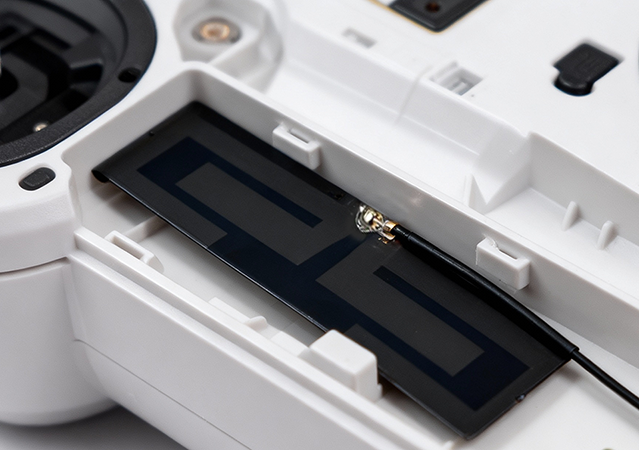
When you're scrolling through videos or sending messages, have you ever wondered: inside your phone's slim body, who is silently commanding the invisible electromagnetic waves, accurately connecting to a cell tower kilometers away?
It is the Cellular Antenna — the core of mobile communication terminals, a "micro commander" hidden beneath the phone's frame or back cover.


What is a "Cellular Antenna"?
It specifically refers to the antenna used for Cellular Mobile Communication Networks (from 2G to 5G). Unlike standalone rubber duck antennas, it is typically a highly integrated, meticulously designed internal antenna responsible for establishing a two-way RF link between the device and the cellular network base station.
Core Mission: To operate within extremely limited space, counteract interference from the metal body, and cover a broad frequency range from 700MHz to 6GHz.
The Extreme Challenges of Design and Manufacturing
The "precious real estate" inside smartphones turns cellular antenna design into a constant battle against the laws of physics:
Spatial Magic: The mainstream solutions have evolved from external and spring-contact antennas to Metal Frame Antennas (using part of the frame as the radiator) and FPC/LDS Antennas (circuits laser-direct-structured onto plastic housings).
Material Revolution: High-frequency bands (like 5G mmWave) have spurred new flexible circuit materials such as Liquid Crystal Polymer (LCP) to enable ultra-low-loss signal transmission.
System Warfare: Modern phones are typically equipped with 4 to 8 or even more cellular antennas, forming MIMO (Multiple-Input Multiple-Output) arrays to boost speed and stability through diversity techniques. Antenna performance must be co-optimized with the RF front-end and the overall device structure.
Core Manufacturing Processes
· LDS (Laser Direct Structuring): A laser etches 3D antenna patterns onto specific plastic parts, followed by chemical metallization. High precision, suitable for complex spaces.
· FPC (Flexible Printed Circuit) Antenna: Antenna patterns are etched onto flexible copper foil, then laminated inside the housing. Cost-effective and flexible in design.
· AiP (Antenna-in-Package): For millimeter-wave bands, integrating the antenna array and RF chip into a single package represents the most cutting-edge technological path.
An Interesting Fact
Why is there usually a thin "break line" at the top of your phone? That is precisely the Antenna Break. It isolates a section of the metal chassis to serve as the antenna's main radiator, a hallmark of the perfect union between industrial design and RF engineering.