
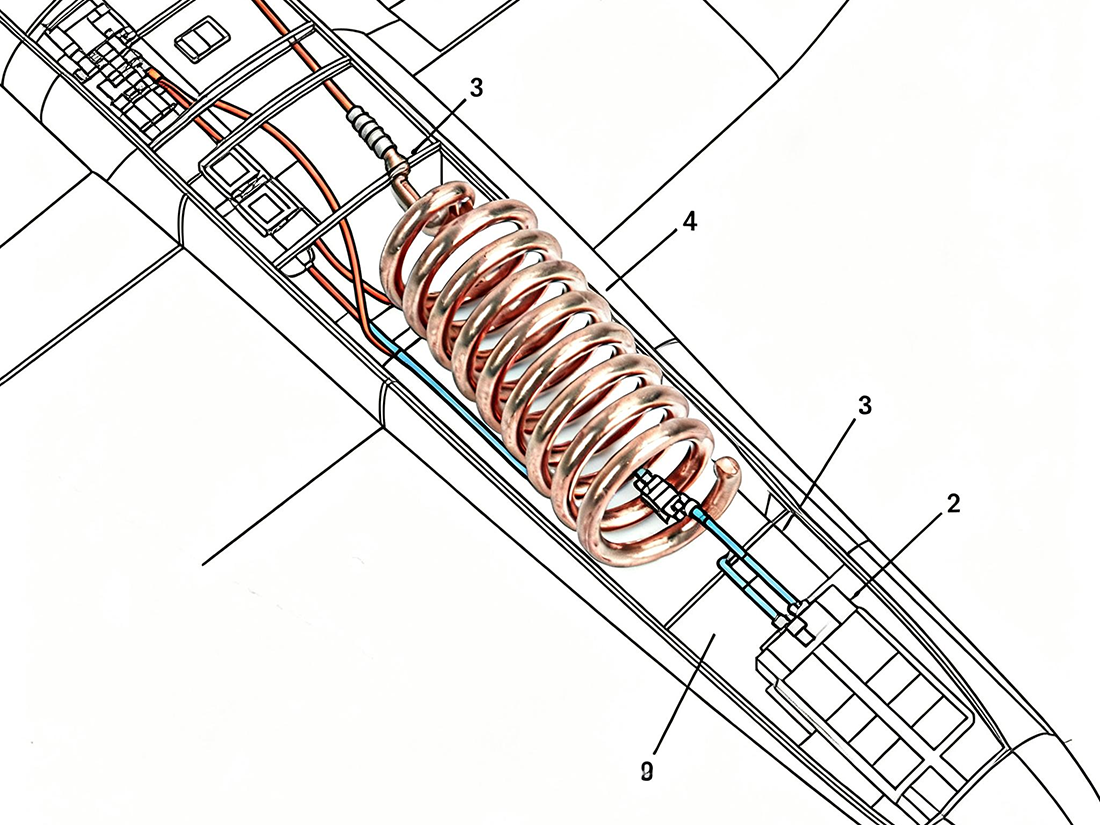

Open the history album of communication devices, and you'll find a classic silhouette: a spring antenna extending from the top of the device with tight coils. It was not only the hallmark of early mobile phones and walkie-talkies but also an engineering masterpiece that ingeniously fused electrical performance with mechanical design.
Today, let's talk about the spring antenna (or helical antenna) — an art of "elasticity" that may seem retro yet remains irreplaceable in specific fields.
Core Design: A "Duet" of Electrical and Mechanical Engineering
The spring antenna is not merely for aesthetics or shock absorption. Its helical structure is key to achieving specific performance:
· The "Magic" of Electrical Length: By coiling the conductor into a helix, the antenna achieves a longer electrical length within a shorter physical length, thereby optimizing resonance performance in lower frequency bands within limited dimensions.
· A Natural "Shock Absorber": The spring structure effectively absorbs impact and bending stress from all directions, providing excellent physical protection for the antenna's core conductor, significantly enhancing reliability in mobile and handheld scenarios.


Manufacturing Essence: Precision Lies in Every Coil
Manufacturing a high-performance spring antenna is far more complex than simply coiling a metal wire:
· Precise Control of Helical Parameters: Minute changes in pitch, number of turns, and helix diameter directly affect the antenna's center frequency, bandwidth, and radiation efficiency.
· Material Selection: The spring wire needs to combine good conductivity (e.g., phosphor bronze, silver-plated copper) with excellent mechanical elasticity and fatigue resistance.
· Connection and Packaging Reliability: The solder or crimp connection at the bottom of the spring to the connector must be extremely robust to withstand repeated shaking; the cap or ball at the top needs to provide both insulation and protection.